
Wyszukiwarka
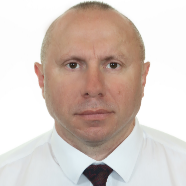
dr hab. inż. Wojciech Macek
Zatrudnienie
- Associate Professor w Wydział Inżynierii Mechanicznej i Okrętownictwa
Obszary badawcze
Media społecznościowe
Kontakt
- wojciech.macek@pg.edu.pl
Profesor uczelni
- Miejsce pracy
-
Budynek M-T
pokój 403A otwiera się w nowej karcie - wojciech.macek@pg.edu.pl
Wybrane publikacje
-
Kriging-assisted hybrid reliability design and optimization of offshore wind turbine support structure based on a portfolio allocation strategy
In recent years, offshore wind power generation technology has developed rapidly around the world, making important contributions to the further development of renewable energy. When designing an Offshore Wind Turbine (OWT) system, the uncertainties in parameters and different types of constraints need to be considered to find the optimal design of these systems. Therefore, the Reliability-Based Design Optimization (RBDO) met1
-
Active Kriging-based conjugate first-order reliability method for highly efficient structural reliability analysis using resample strategy
Efficient structural reliability analysis method is crucial to solving reliability analysis of complex structural problems. High-computational cost and low-failure probability problems greatly limit the efficiency in structural reliability analysis problems, causing the safety and reliability of the structure to be questioned. In this work, a highly efficient structural reliability analysis method coupling active Kriging algo1
-
Comparison of different one-parameter damage laws and local stress-strain approaches in multiaxial fatigue life assessment of notched components
Uzyskane stopnie/tytuły naukowe
-
2023-02-15
Nadanie stopnia naukowego
dr hab. inż. inżynieria mechaniczna (Dziedzina nauk inżynieryjno-technicznych)
Zainteresowania badawcze
Moje badania koncentrują się na mechanizmach uszkodzeń zmęczeniowych i pękania materiałów metalicznych, ze szczególnym uwzględnieniem fraktografii ilościowej oraz wieloskalowej, trójwymiarowej charakterystyki powierzchni przełomów. Wykorzystuję skaningową mikroskopię elektronową i optyczne metody pomiaru topografii powierzchni, analizując propagację pęknięć zmęczeniowych, morfologię przełomów oraz materiały wytwarzane przyrostowo. Celem badań jest określenie zależności między cechami powierzchni przełomu, historią obciążenia i trwałością zmęczeniową materiałów.
wyświetlono 4238 razy